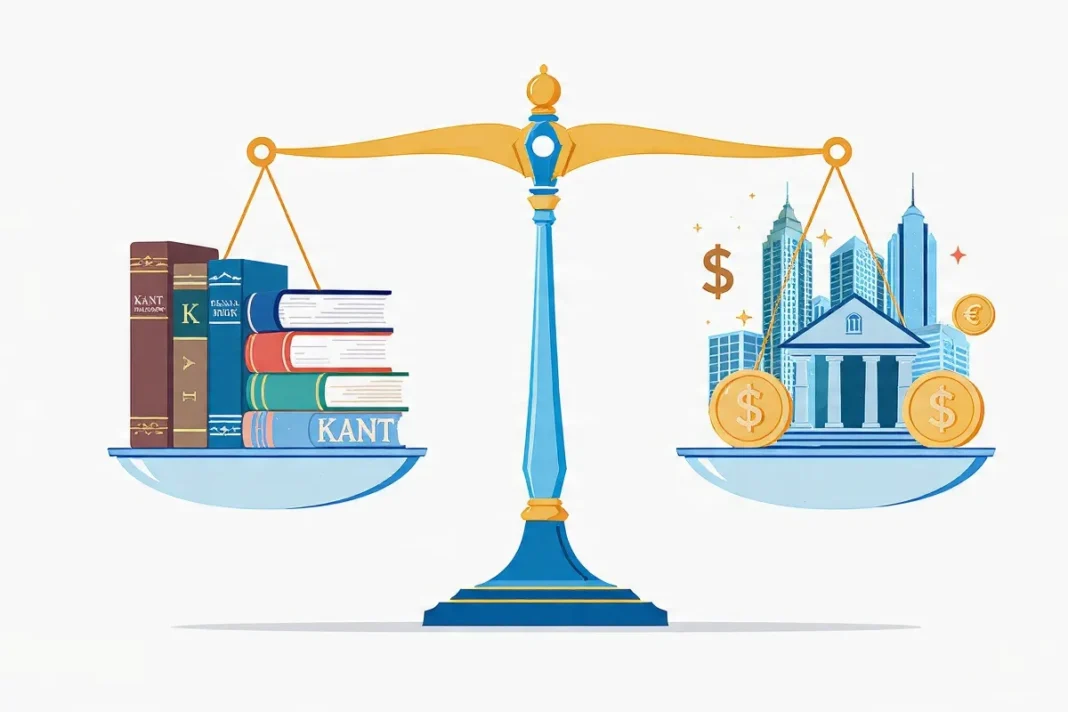
Kantian ethics offers a powerful framework built on duty, universal moral rules, and respect for human dignity, but it struggles when applied directly to today’s complex financial system. Modern markets, behavioral biases, and systemic risks expose several gaps where a strict Kantian approach can become rigid, impractical, or even misleading in real‑world finance.
Quick answer: Is Kantian ethics enough for finance?
Kantian ethics alone is not enough to guide ethical decision‑making in modern finance because it focuses on intentions and universal rules while often ignoring outcomes, human irrationality, and systemic effects. A more realistic approach combines Kantian respect for persons with insights from behavioral finance, risk ethics, and outcome‑based thinking to manage real‑world products, incentives, and crises.

What is Kantian ethics in finance?
Kantian ethics is a duty‑based (deontological) theory that says an action is morally right if it follows universal moral rules and treats people as ends in themselves, never merely as means. In finance, this often translates into principles like honesty in disclosure, honoring contracts, respecting client autonomy, and refusing to manipulate or deceive counterparties, even if doing so might be profitable.
Key features of Kantian ethics relevant to finance include:
-
Categorical imperative: Act only on rules you could want everyone to follow, such as “never mislead investors.”
-
Respect for persons: Clients, employees, and investors must never be treated purely as profit‑generating tools.
-
Duty over consequences: What matters most is the rightness of the action, not just financial outcomes.
These ideas have shaped codes of conduct, professional standards, and regulatory thinking, but applying them directly reveals serious limits in modern markets.
Problem 1: Ignores real‑world investor irrationality
Traditional finance assumes rational, consistent decision‑makers, while behavioral finance shows that most investors are driven by fear, greed, herding, and mental shortcuts. Studies suggest that a large share of individual investors act in systematically irrational ways, such as overreacting to losses and following crowds into bubbles.

Kantian ethics assumes agents who can reason clearly about universal rules and long‑term duties, but many retail investors do not process risk or information in that ideal way. This creates a tension: simply “respecting autonomy” by disclosing complex information may not be enough when cognitive biases guarantee that many people will misunderstand or ignore it.
Problem 2: Overemphasis on rules, underemphasis on outcomes
Kantian ethics focuses on whether a rule is universalizable, not on whether the decision leads to good or bad real‑world consequences. In finance, however, outcomes matter enormously for livelihoods, pensions, housing markets, and overall economic stability.
A product design or trading strategy can satisfy a formal duty (for example, “provide the required disclosures”) while still being harmful if it predictably leads to consumer over‑indebtedness or systemic risk. Ethical finance needs a view that weighs the harm or benefit of products, incentives, and leverage levels—not just the purity of intentions or compliance with abstract rules.
Problem 3: Rigidity in complex market situations
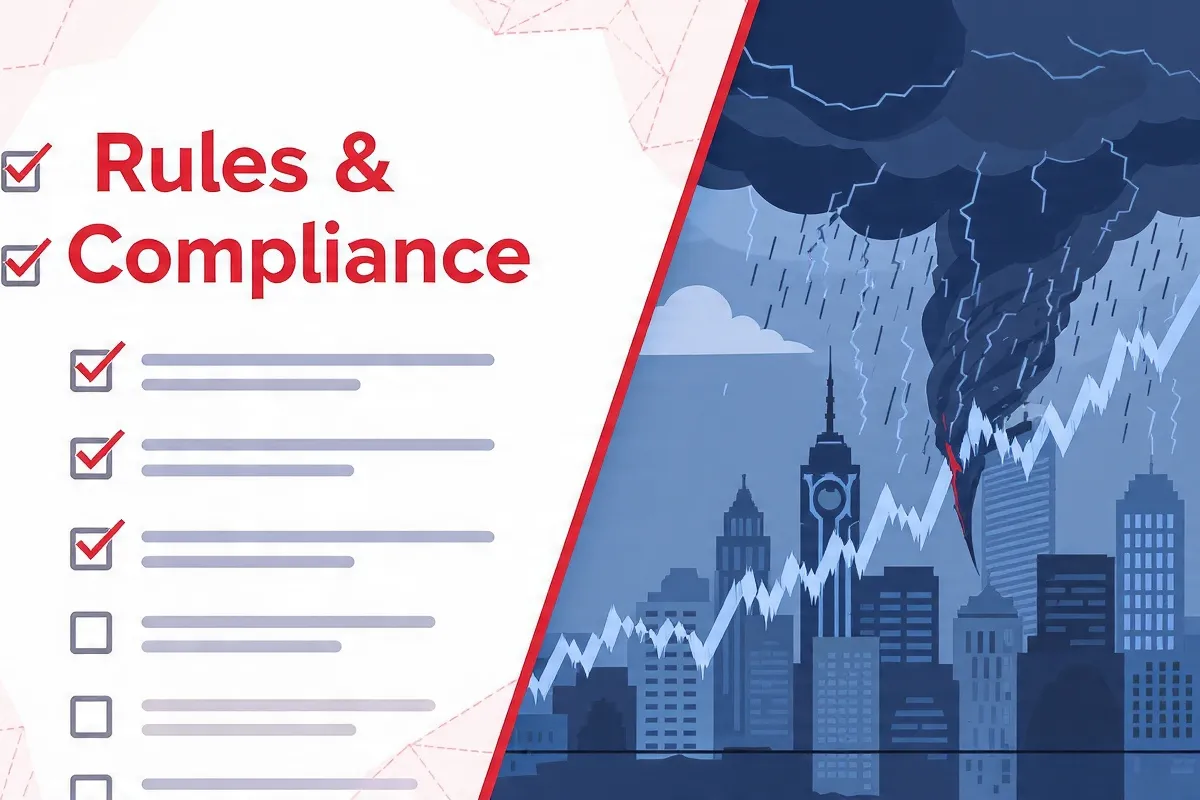
Critics argue that Kantian ethics can become rigid and inflexible because it treats some duties as exception less regardless of context. In fast‑moving markets, risk managers and leaders often face tragic choices where every option violates some principle: saving a failing bank may reward moral hazard, while letting it fail may damage millions of innocent savers and businesses.
Kant’s framework gives few tools for trading off conflicting duties such as truthfulness, fairness, promise‑keeping, and preventing large‑scale harm. Finance needs a more nuanced framework that can handle emergencies, second‑best options, and “least‑bad” choices without pretending every decision can cleanly follow a perfect rule.library.
Problem 4: Weak guidance on systemic financial risk
Kant’s original work focused on individual actions and personal morality, not on complex, networked systems like global capital markets. Yet many of the worst financial harms arise from systemic risk—chains of leverage, opacity, and interdependence that make the entire system fragile.

Questions like “Is it ethical for a firm to rely on a likely bailout?” or “Is it moral to package and sell highly correlated risks that few truly understand?” require analysis of shared vulnerabilities across institutions, not just single‑firm duties. Kantian ethics offers some tools via distinctions between prudence and morality, but it still struggles to evaluate the ethics of activities whose chief danger is system‑level collapse rather than any single transaction.
Problem 5: Limited tools for regulation and policy design
Kantian ethics can inspire principles like transparency, non‑deception, and respect for autonomy, but regulators must also decide how much to intervene, how strict to be, and which trade‑offs are acceptable. Behavioral research shows that heavy‑handed paternalism can sometimes backfire, while light‑touch approaches can leave consumers exposed to predatory practices.
Purely Kantian reasoning does not easily answer whether regulators should ban complex products, nudge investors with defaults, or impose leverage caps for system safety. Effective financial regulation usually blends deontological ideas (rights and fairness) with consequentialist and behavioral insights about actual human behavior.
Problem 6: Abstract respect vs. economic inequality
Kant’s focus on equal moral worth emphasizes that every person has dignity and must never be used merely as a means. Yet modern finance operates in a world of extreme wealth gaps where low‑income households often carry high‑cost debt while wealthier investors enjoy sophisticated products and better advice.

Treating borrowers and investors as formally “equal” in contracts can hide substantive inequalities in knowledge, bargaining power, and vulnerability. Kantian ethics tends to concentrate on fair procedures and voluntary agreement, while broader questions of distributive justice, structural disadvantage, and long‑term inequality remain under‑developed in his core framework.
Problem 7: Difficulty handling conflicting duties in finance
In finance, professionals regularly face clashes between duties: loyalty to clients, obligations to shareholders, responsibilities to employees, and duties to the broader public or environment. Kantian ethics recognizes that duties can conflict but provides only limited, high‑level guidance on how to resolve those conflicts in practice.

For example:
-
A portfolio manager may feel torn between maximizing returns for clients and avoiding investments that contribute to social or environmental harm.
-
A bank executive may have to choose between honoring contractual bonuses and preserving jobs or solvency.
Without a clear method for ranking or reconciling these duties, Kantian analysis can become either arbitrary or paralyzing in such cases.
Problem 8: Underestimates emotional and relational factors
Kantian ethics gives priority to rational, rule‑guided decision‑making and often sidelines emotions, relationships, and care as moral resources. Behavioral finance, by contrast, shows that emotions such as fear, hope, and overconfidence are central drivers of financial decisions and market cycles.
In practice, trust, reputation, and long‑term relationships significantly shape ethical behavior in finance—sometimes more than formal rules alone. Approaches that integrate virtues (like prudence and honesty) and relational ethics can better capture how culture, leadership, and shared norms influence real decisions inside financial institutions.chris-downs.
Problem 9: Challenges with innovation and financial technology
Kant wrote in a pre‑digital era, yet many of today’s hardest ethical questions arise around algorithmic trading, robo‑advisors, AI‑driven lending, and data‑driven targeting of consumers. These tools can respect the formal rules of disclosure and consent while still creating opaque, high‑speed systems that few people fully understand.

Kantian ethics offers important constraints—such as not manipulating people’s vulnerabilities or exploiting ignorance—but provides limited help for evaluating complex trade‑offs like:
-
How transparent is “transparent enough” for algorithmic models?
-
When does personalized pricing or nudging cross the line into exploitation?
Modern finance therefore needs additional frameworks from technology ethics, data protection, and fairness in machine learning to complement Kantian ideas.stanford.
Problem 10: Not a full guide for responsible product design
Designing financial products responsibly requires balancing profitability, customer benefit, clarity, risk, and long‑term sustainability. Kantian ethics can rule out obviously deceptive or manipulative designs but says less about how to positively design products that support good financial lives over decades.
For example, a credit card with complex rewards and back‑loaded fees might pass a narrow Kantian test if everything is disclosed and no one is explicitly deceived. Yet long experience shows that many consumers misunderstand such structures, leading to chronic debt and stress—an outcome that calls for more outcome‑sensitive and behaviorally informed design criteria.
How to apply a better ethical mix in finance
A more realistic and effective approach blends Kantian respect for persons with insights from other frameworks.
Useful elements to combine include:
-
Kantian ethics: Non‑deception, honoring commitments, respecting autonomy and dignity.
-
Consequentialist thinking: Evaluating harms and benefits of products, leverage, incentives, and systemic exposures.
-
Behavioral finance: Designing disclosures, defaults, and products that account for biases and emotional decision‑making.
-
Virtue and culture‑based ethics: Building institutions that prize integrity, prudence, and accountability, not just rule‑compliance.

Firms that adopt this blended approach are better positioned to prevent misconduct, reduce tail risks, and build trust with regulators, clients, and society.
Practical examples and mini case studies
Here are simplified illustrations of how these problems show up in real practice:
-
Complex mortgage products: Before the global financial crisis, many institutions created and sold complex mortgage‑backed securities that were technically disclosed but poorly understood by many investors. A narrow Kantian focus on non‑deception and formal consent missed the broader systemic risk and predictable misunderstanding.
-
Retail trading apps and gamification: Some platforms use design elements that encourage frequent trading and risk‑taking, even when that behavior statistically harms long‑term returns for users. Treating users as fully rational and autonomous ignores behavioral evidence and can turn “respect for choice” into masked exploitation.
-
Bailout expectations: Large institutions that assume they will be rescued if things go wrong may structure their risk in ways that endanger the entire system. Kantian concepts of prudence and duty do not alone give clear answers about acceptable levels of such moral hazard.
Featured snippet–style Q&A
What is Kantian ethics in finance?
Kantian ethics in finance is a duty‑based approach that evaluates financial decisions by asking whether their guiding rules could be universal laws and whether they treat all stakeholders as ends in themselves, not merely as tools for profit.
Why is Kantian ethics criticized in finance?
Kantian ethics is criticized in finance because it can be rigid, focuses more on intentions than outcomes, and assumes rational agents, which clashes with evidence that many investors behave irrationally and markets create complex systemic risks.
FAQs about Kantian ethics and finance

1. Is Kantian ethics completely useless in finance?
No, Kantian ethics remains valuable for setting non‑negotiable standards such as honesty, non‑manipulation, and respect for client autonomy. Its limits appear when it is used as the only framework for evaluating complex products, systemic risks, or behaviorally driven markets.
2. How does Kantian ethics differ from utilitarianism in financial decisions?
Kantian ethics judges actions by duties and universal rules, while utilitarianism focuses on maximizing overall good or utility. In finance, a Kantian might refuse a profitable but deceptive product on principle, while a utilitarian might ask whether its overall benefits outweigh its harms.
3. Can Kantian ethics prevent financial crises?
Kantian principles like honesty, prudence, and respect for persons can reduce some forms of misconduct, such as fraud and deliberate deception. However, crises driven by complexity, herd behavior, and systemic risk require additional tools from macroprudential policy, behavioral finance, and risk regulation.
4. How does behavioral finance challenge Kantian ethics?
Behavioral finance shows that many investors act irrationally due to biases like loss aversion, overconfidence, and herd behavior, which undermines the assumption of fully rational, autonomous agents. This suggests that simply providing information and respecting formal consent may not be enough to protect people from predictable mistakes.
5. Is it ethical to sell complex products to retail investors under a Kantian view?
A strict Kantian view would require that investors are not deceived and that their autonomy is respected, which demands clear, understandable information and no exploitation of ignorance. But given strong evidence of misunderstanding and bias, many ethicists argue for stronger safeguards and suitability checks beyond minimal disclosure.
6. What role can Kantian ethics play in ESG and sustainable finance?
Kantian ideas support treating communities and future generations as ends in themselves, not mere instruments for current profit. This reinforces commitments to human rights, environmental care, and fair labor practices within ESG frameworks.
7. How can a financial firm practically combine Kantian ethics with other approaches?
Firms can adopt Kantian‑inspired codes of conduct (no deception, respect for dignity), use behavioral insights in product and disclosure design, and apply outcome‑focused risk management to monitor systemic and consumer harms. This multi‑layered approach turns abstract principles into concrete policies, training, and incentives that shape everyday decisions.
Call to action for finance professionals and leaders

Finance professionals, regulators, and executives should treat Kantian ethics as a necessary but not sufficient foundation for ethical decision‑making. The next step is to integrate it with behavioral evidence, systemic‑risk thinking, and outcome‑oriented analysis to build products, policies, and cultures that are both principled and practical in the real world.
References:
- https://corporatefinanceinstitute.com/resources/esg/kantian-ethics/
- https://plato.stanford.edu/entries/kant-moral/
- https://www.rep.routledge.com/articles/thematic/kantian-ethics/v-1/sections/criticisms-of-kantian-ethics
- https://www.cambridge.org/core/journals/business-ethics-quarterly/article/imprudence-and-immorality-a-kantian-approach-to-the-ethics-of-financial-risk/E7778B888F505B1FFD219DD799ED49AE
- https://ir.lawnet.fordham.edu/cgi/viewcontent.cgi?article=1347&context=jcfl
- https://stanford.universitypressscholarship.com/view/10.11126/stanford/9780804768948.001.0001/upso-9780804768948-chapter-2
- https://www.rgcms.edu.in/wp-content/uploads/2025/03/Behavioral-Finance-How-Emotions-Influence-Investment-Decisions.pdf
- https://online.mason.wm.edu/blog/what-is-behavioral-finance
- https://library.achievingthedream.org/epccintroethics1/chapter/kantian-ethics-criticisms/
- https://plato.stanford.edu/entries/kant-social-political/
- https://dr.lib.iastate.edu/bitstreams/b1cee6d8-b7f6-4fca-a1a4-9f75306ad0bd/download
- https://ecpr.eu/Events/Event/PanelDetails/16372
- https://philpapers.org/archive/HOYHCO.pdf
- https://spot.colorado.edu/~huemer/papers/kant1.htm
- https://peped.org/philosophicalinvestigations/handout-kant-and-business-ethics/


